
Property · due diligence and existing-asset strategy
New-build risks identified. The investment strategy refocused on existing assets.
PERCEL investigated a historic property in Bad Herrenalb, developed use concepts and assessed their commercial prospects. Under significant time pressure and competition from several prospective buyers, development options were defined, costs assessed and key risks identified before the purchase contract was notarised.
Starting point
A distinctive location. Historic fabric. A narrow window for decision.
A historic building ensemble in the Oberes Gaistal offered an attractive starting point for long-term property development: a natural setting, generous grounds and a variety of existing structures.
Several competing prospective buyers and a narrow timeframe increased the pressure to decide. Key questions about use, building development and commercial viability therefore needed a robust assessment at short notice.
A reliable cost assessment was essential. Acquisition costs, building works, potential income and risk allowances had to be considered together to establish the commercial room for negotiation.
PERCEL contribution
Investigation, use concepts and negotiation preparation led together.
PERCEL carried out the investigation, developed alternative use concepts and assessed their commercial requirements. The individual assessment steps and their findings were continually aligned:
- examined location and property information and compared it with an alternative investment
- conducted site visits and reviewed available property records
- investigated demolition and new construction, and refurbishment and development of existing assets, as separate routes
- developed potential uses and calculated investment requirements and potential rental income
- investigated full reconstruction of the historic property and concepts for zero emissions and complete energy self-sufficiency
- examined core planning and building-law questions directly with the responsible authorities and municipal decision-makers
- researched historical records and property rights and investigated indications of building-related risks
- consolidated cost assumptions and risks into a traceable framework for the investment decision and negotiations
Personal commitment
Direct access to the information that mattered.
Clarifying the key questions required intensive personal discussions with specialist departments and responsible officials at municipal and higher administrative levels. Targeted follow-up questions and the consolidation of different responses provided a firmer assessment of the essential conditions within the narrow timeframe.
Digital methods
Understand existing assets digitally. Compare options earlier.
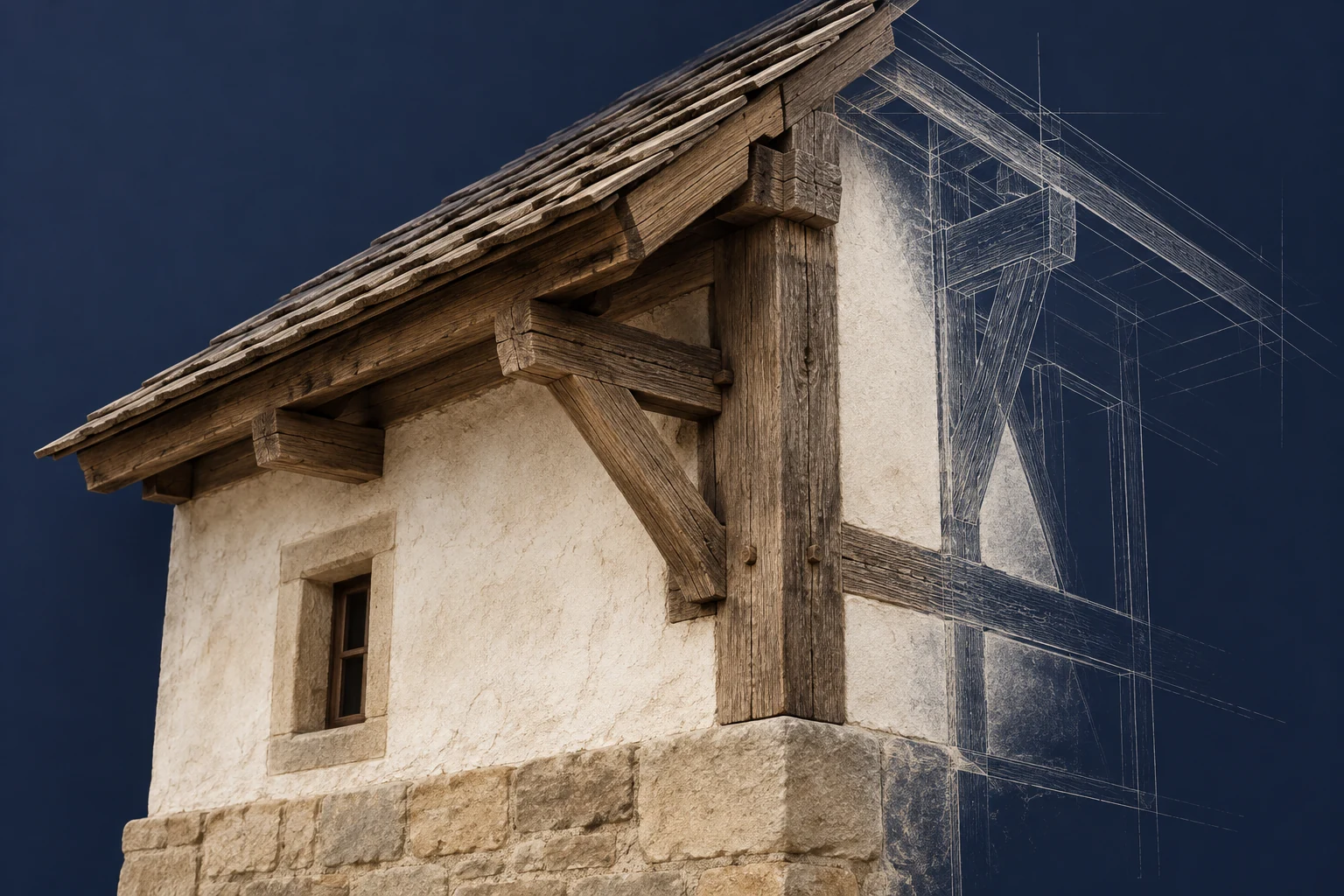
Site observations, property images and available records were translated into digitally supported visualisations of existing structures and potential uses. Building structures were reconstructed spatially, and possible changes within their existing volumes were explored visually.
This enabled early comparison of layout ideas, connections between structures and alternative uses. The visual preliminary review helped narrow down options faster and focus further investigations on the decisive questions, saving time and analytical effort.
Use and energy supply
Plan historic fabric and future operation together.
The use scenarios also included full reconstruction of the historic property. Restoration of the ensemble, contemporary use concepts and future technical services were considered together.
An integrated energy and services concept was investigated for the property. The aim was fossil-free operation with emissions minimised as far as possible. The assessment also examined a zero-emission scenario and the potential for complete energy self-sufficiency, taking the legal framework into account.
Building interventions, energy and services concepts and their costs were therefore treated as one connected development task during due diligence.
Key finding
Develop commercial solutions and examine their legal prerequisites.
During due diligence, commercially viable and profitable use solutions were developed for both routes under their respective cost and income assumptions. This provided concrete approaches to the long-term use of the ensemble through demolition and new construction or through refurbishment and reorganisation of existing assets.
The preliminary planning and building-law review substantially changed the relative weight of these options. According to the authority assessment obtained, the absence of designated building envelopes and non-compliance with forest setback requirements were likely to prevent new construction.
The subsequent strategy therefore focused on the existing buildings. Their preservation, restoration, modernisation and potential conversion became the starting point for development. The determining factor remained which interventions and uses could be pursued under the applicable legal conditions.
Result
An informed negotiating position and an adapted development strategy.
Within a narrow decision window, due diligence established a traceable basis for negotiation and investment. Use scenarios, cost frameworks and key risks were defined sufficiently to support a considered acquisition decision with a clear development direction.
The decisive new-build risks were known before the purchase contract was notarised. At the same time, a commercially developed approach existed for phased development of the existing assets, with potential combinations of owner use and letting. Restoration of the historic ensemble and the investigated goals for energy supply and operation were already incorporated.
PERCEL combined its own investigations, direct personal clarification, digital analysis and commercial assessment. New findings fed directly into use concepts, cost assessments and the negotiating position. The resulting investment strategy connected existing assets, long-term use objectives and the actual conditions of the site.
A comparable investment decision?